
 Play
 Color & Print
 Watch
 Fire Words
Real firefighters have a name for everything on the rig and on their backs. Tap a cubby to open it and learn the word.
 Open the cubbies

Is that a fire truck?
Lots of people call every big red rig a fire truck. Firefighters have two different names. One brings the water. One brings the giant ladder.
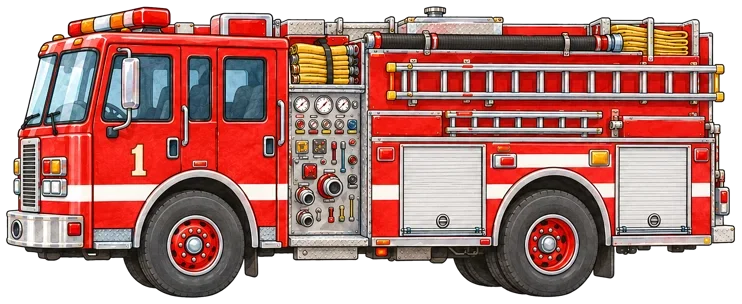
Engine
Brings the water. It has a pump, a water tank and lots of hose.
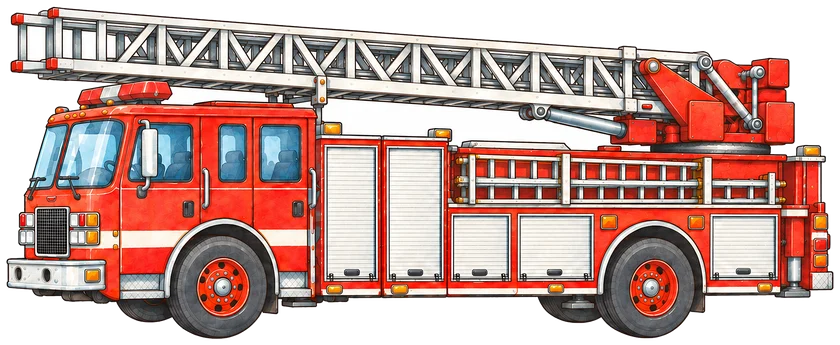
Ladder truck
Brings the giant ladder, plus more ladders and tools to open doors.
So what do most people call both of them? Fire trucks! And that's okay. Now you know the secret names.
Play Engine or Truck?The gear rack
Rigs
The fire vehicles. Firefighters call them rigs, and grown-ups in the fire service say apparatus.
Engine
A fire engine brings water and hoses. It has a strong pump that pushes the water through the hoses so firefighters can spray the fire.
Is it an engine or a truck? An engine! It has the pump, the water and the hose.
For grown-ups
Also called a pumper. It carries its own water tank, so the crew can start on the fire before they hook up to a hydrant. It may carry short ladders on its side; that doesn't make it a ladder truck.
Ladder truck
A ladder truck has a giant ladder that stretches way up high. Truck firefighters also carry tools to open doors and help people get out.
Is it an engine or a truck? A truck! Look for the giant ladder on top.
For grown-ups
In the fire service, “truck” means this rig: an aerial ladder or platform, lots of ground ladders and rescue tools, and little or no water. Its crew handles forcible entry, search, ventilation and rescue.
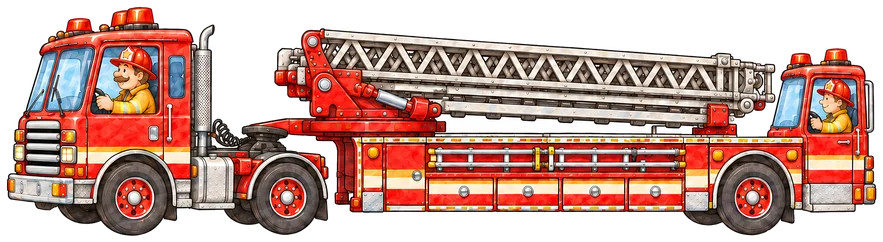
Tiller
A tiller is an extra-long ladder truck. A second driver sits way in the back and steers the back wheels!
Is it an engine or a truck? A truck! It's a ladder truck with a driver in the back, too.
For grown-ups
Also called a tractor-drawn aerial. The rear driver, the tillerman, steers the back wheels so the long truck can turn tight corners. The two drivers talk by headset and buzzer signals.
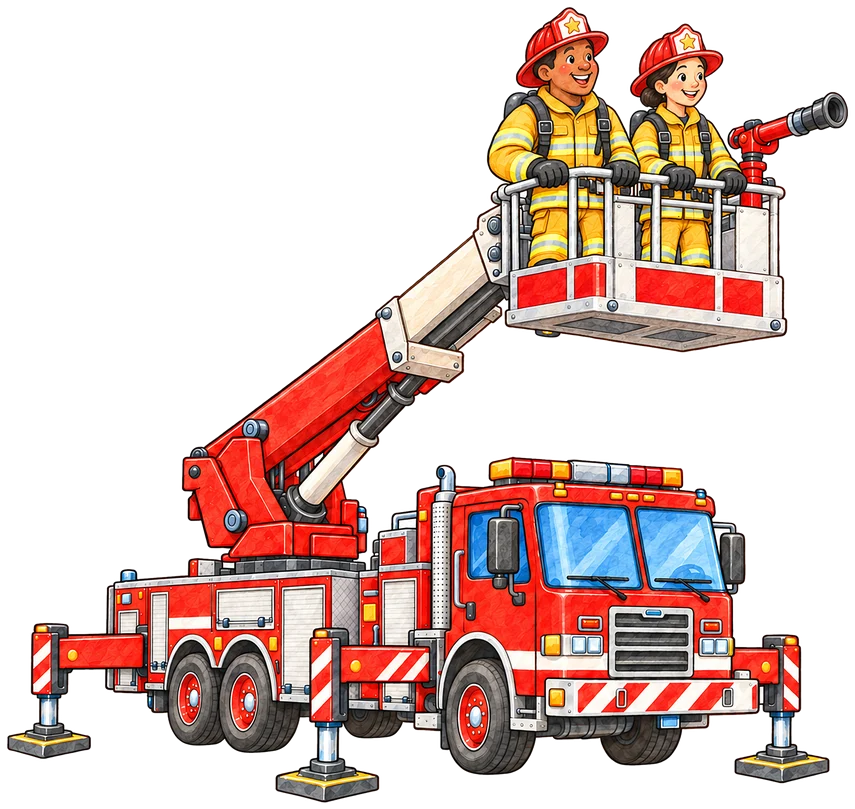
Tower ladder
A tower ladder is a ladder truck with a bucket at the top. Firefighters can stand in the bucket, way up high.
Is it an engine or a truck? A truck! It's a ladder truck with a bucket at the top.
For grown-ups
Also called a platform. The bucket usually has a water nozzle, and stabilizer legs called outriggers go down to the ground before the ladder goes up.
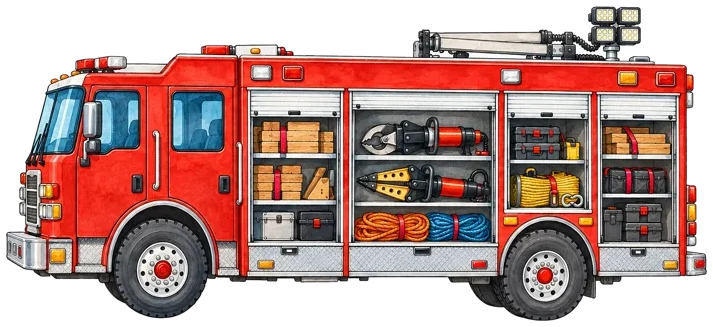
Rescue
A rescue rig is like a giant toolbox on wheels. It carries strong tools to help people who are stuck.
Is it an engine or a truck? Neither! It's a rescue rig.
For grown-ups
Names vary a lot by region: “rescue,” “heavy rescue” and “squad” can mean different rigs in different cities. It has no big aerial ladder and usually no hose bed.
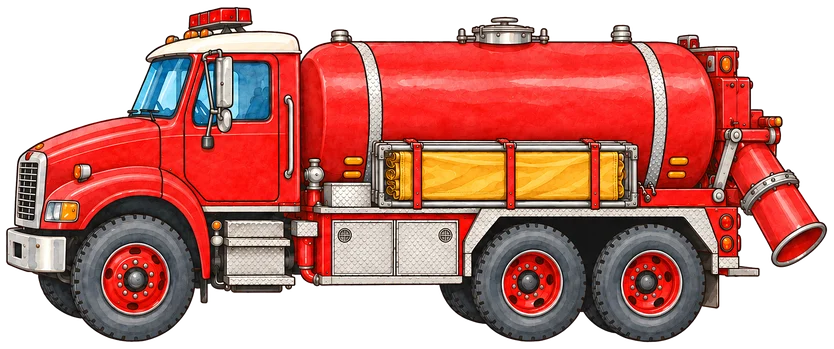
Water tender
A water tender is a giant water carrier. It brings lots of water to places with no fire hydrants, like farms and forests.
Is it an engine or a truck? Neither! It's a water tender, a big water carrier.
For grown-ups
Many towns still call it a “tanker.” National incident typing says “water tender” for the ground vehicle and saves “tanker” for aircraft.
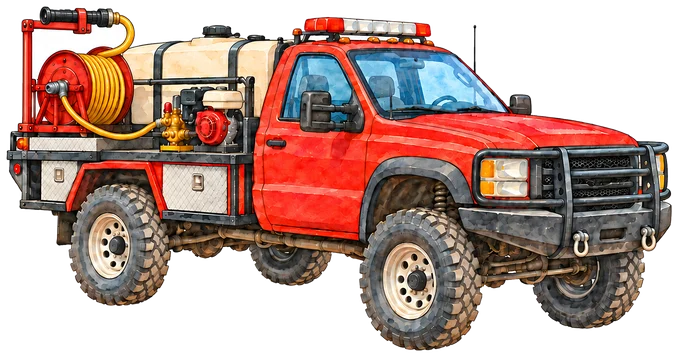
Brush truck
A brush truck is a smaller, tough fire rig. It can drive over bumps and through fields to fight grass and forest fires.
Is it an engine or a truck? An engine! It's a small, tough engine for grass fires.
For grown-ups
Western and federal agencies call it a wildland engine. Many are four-wheel drive, and wildland crews wear lighter gear than firefighters at house fires.
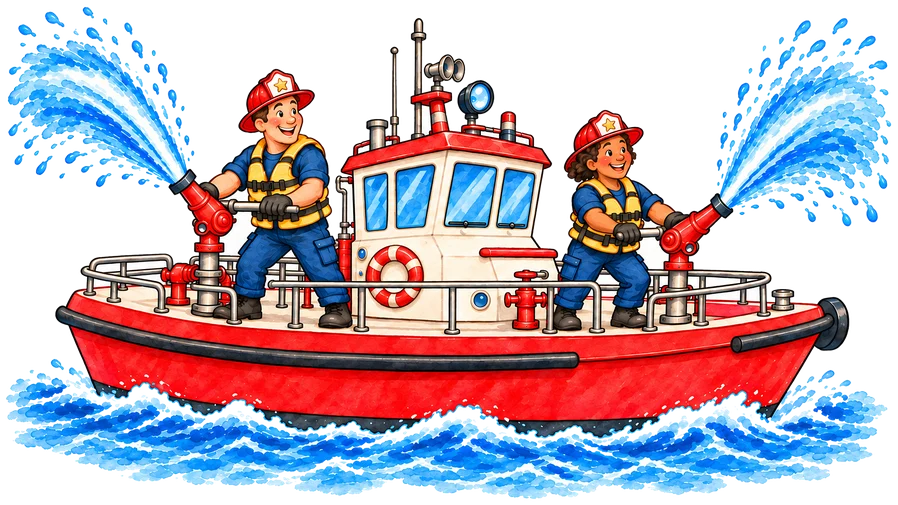
Fireboat
A fireboat is a fire engine that floats! It sucks up water from the lake, river or ocean and sprays it on fires near the water.
Is it an engine or a truck? Neither! It's a boat, but it pumps water like an engine.
For grown-ups
Fireboats pump straight from the water around them, so they don't run out. Some can also pump water ashore when the city's water mains fail.
Gear
What firefighters wear to stay safe. Every piece has a real name.
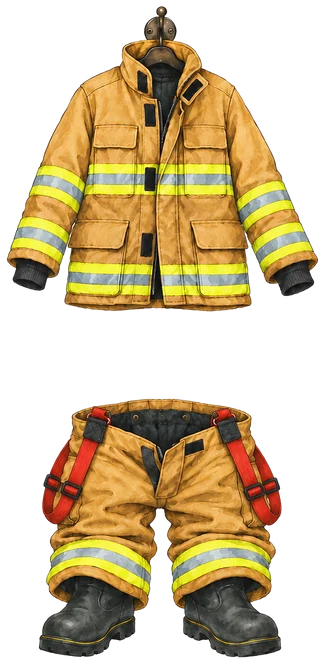
Turnout gear
Turnout gear is a firefighter's super-thick coat and pants. It keeps heat away from their body. Big boots protect their feet.
For grown-ups
“Turnout gear” and “bunker gear” mean the same thing. It has three layers (outer shell, moisture barrier and thermal liner), and the reflective stripes help people see firefighters in the dark.
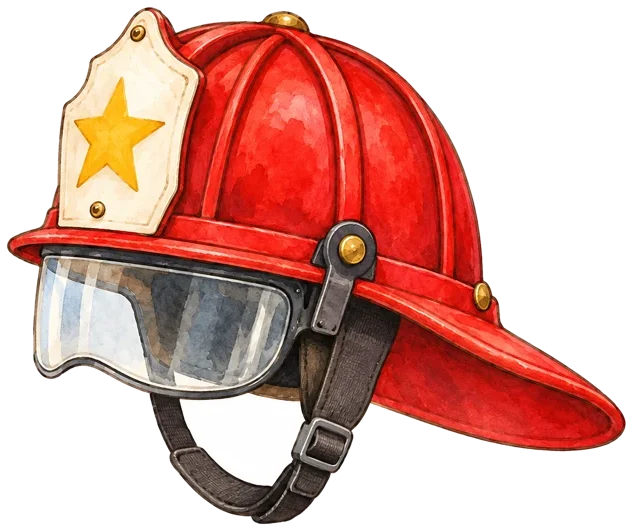
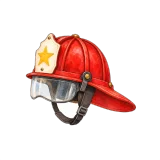
Helmet
A firefighter's helmet is a strong hard hat that protects their head. The shield on the front often shows which fire company they belong to.
For grown-ups
The badge is called the front piece or shield. Helmet colors for rank, like white for chiefs, are a local custom, not a national rule.
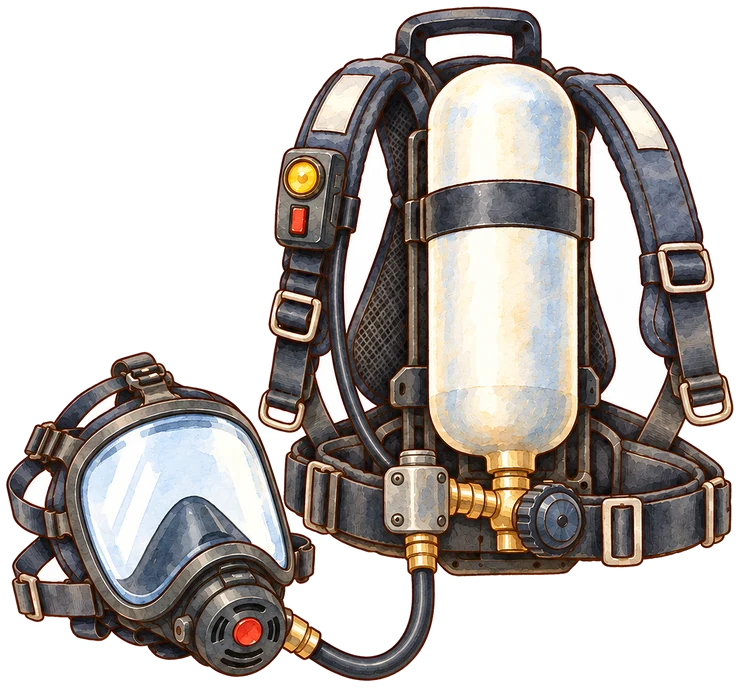
Air pack
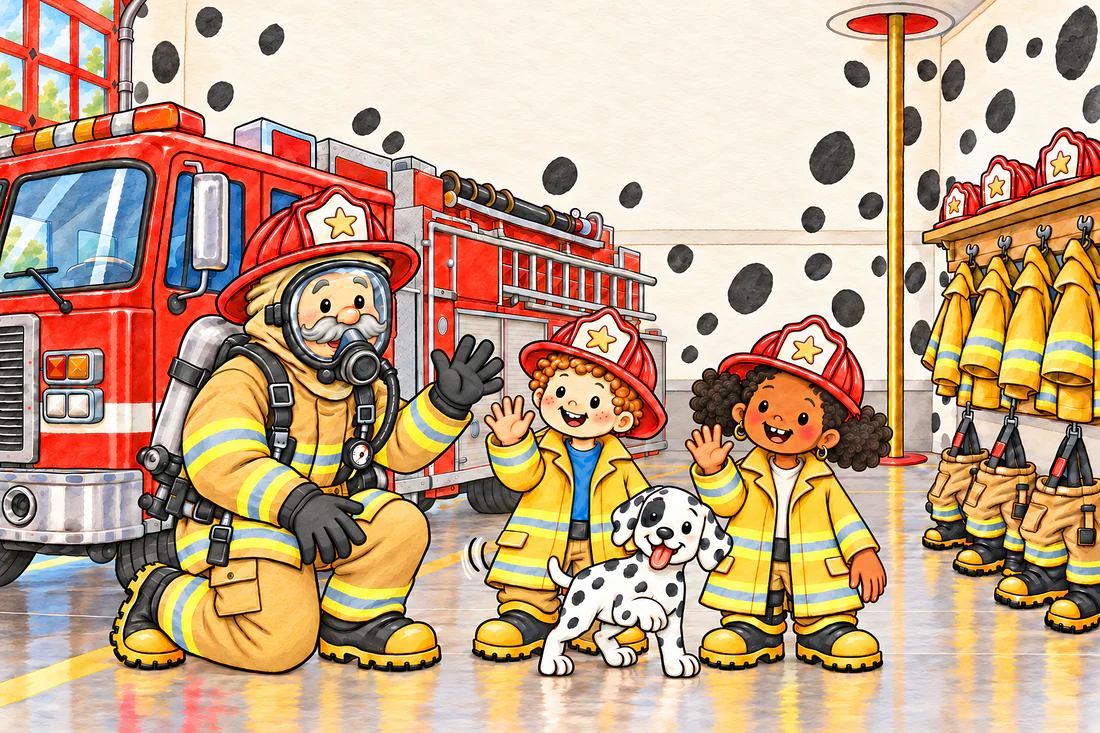
The air pack is a tank on a firefighter's back. It's full of clean air, the same air you breathe right now, squeezed in tight. Firefighters breathe it through a mask so smoke can't get in.
For grown-ups
Its full name is SCBA, self-contained breathing apparatus. The cylinder holds compressed breathing air, about 21% oxygen like room air, never pure oxygen.
Mask
The mask covers a firefighter's whole face. They look out through a big clear window and breathe clean air from their tank. It makes their breathing sound loud, but it's still a friendly helper inside.
For grown-ups
The SCBA face piece is full-face and positive-pressure, and many have a voice amplifier. The breathing sound can frighten small children, which is why firefighters often suit up slowly in front of kids on school visits.
Tools
What the crew carries off the rig.
Hose
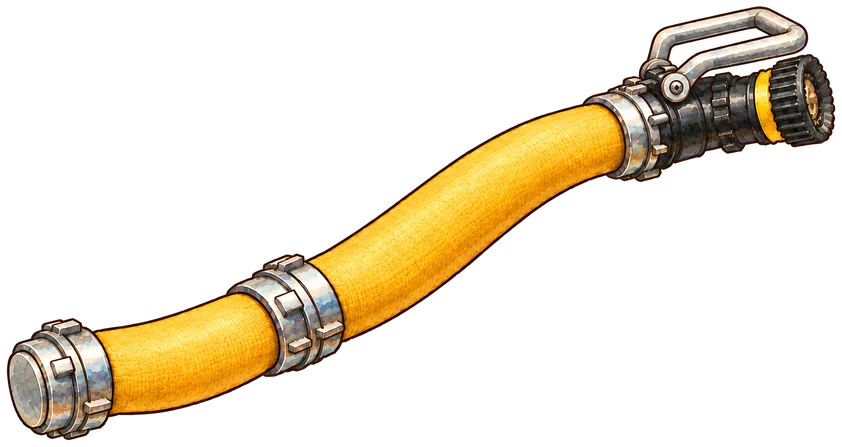
A fire hose is a long, flat tube. When water rushes in, it gets fat and heavy. Firefighters carry it into a fire to spray water.
For grown-ups
The attack line brings water to the fire; the bigger supply line brings water from a hydrant to the engine. Hose usually comes in 50-foot sections, and a hose full of water is “charged.”
Nozzle
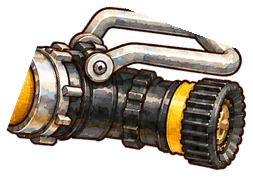
The nozzle is the tip at the end of the hose. A firefighter pulls a handle to turn the water on and off.
For grown-ups
Smooth-bore nozzles make a solid stream; fog nozzles twist from a straight stream to a wide spray. The handle is called the bale: pulled back is open.
Hydrant
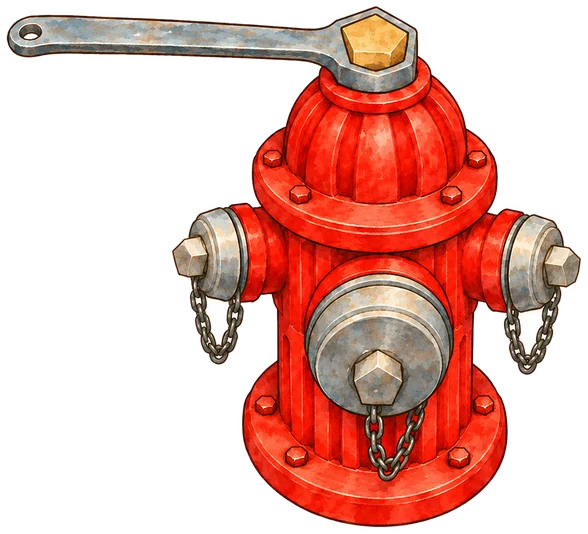
A fire hydrant is a water faucet for firefighters. It's connected to big water pipes under the street.
For grown-ups
In many towns the cap color shows how much water a hydrant can flow (NFPA 291 suggests light blue for the most), but towns vary. The nut on top is usually five-sided and takes a special hydrant wrench.
Ground ladders
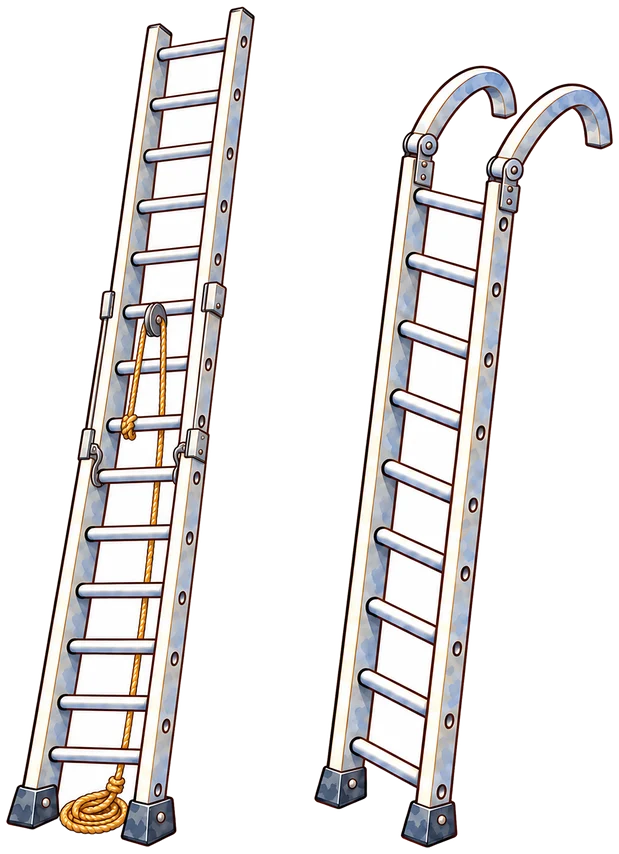
Ground ladders are the ladders firefighters carry off the rig and lean against a building. Some stretch longer, and some have hooks for roofs.
For grown-ups
A typical engine carries a 24-foot extension ladder and a 14-foot roof ladder; ladder trucks carry many more and longer ones. A roof ladder's hooks fold out to grab the peak of a roof.
Axe
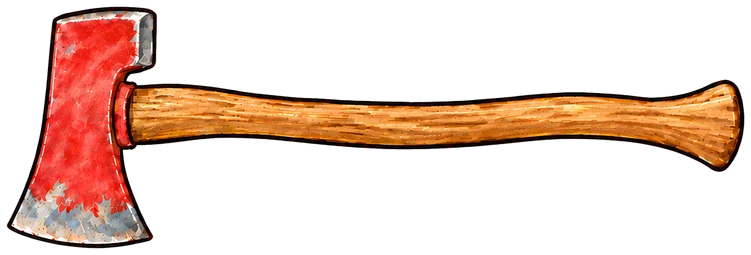
Firefighters carry big axes to break open things that are stuck, like a locked door, so they can get to the fire or help someone.
For grown-ups
The flathead axe has a flat striking face; the pick-head axe has a spike on the back. A flathead axe slid together with a Halligan bar is called “the irons.”
Halligan
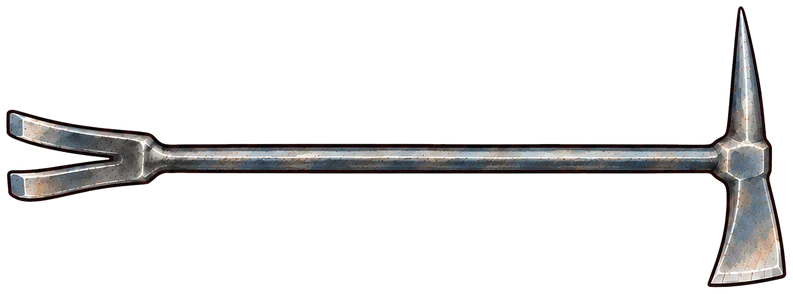
A Halligan bar is a strong metal tool with a claw on one end, and a point and a flat blade on the other. Firefighters use it to pry doors open.
For grown-ups
Designed by FDNY Deputy Chief Hugh Halligan around 1948, it pries, pierces and wedges. It's a common tool for forcing doors open.

Pike pole
A pike pole is a long pole with a hook on the end. Firefighters use it to pull down ceilings to check for hidden fire.
For grown-ups
It's used during overhaul, opening walls and ceilings to find hidden fire, and for ventilation. Lengths vary with the building, often 6 to 12 feet.
Thermal camera
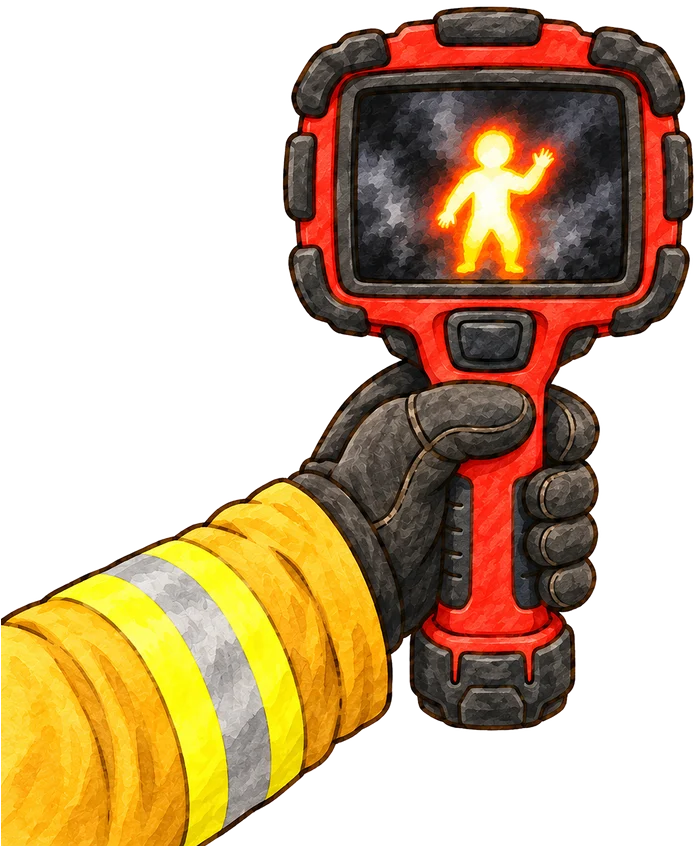
A thermal imaging camera is a special camera that sees heat. Warmer things look brighter on its screen, even in thick smoke. That helps firefighters find people and hot spots.
For grown-ups
A thermal imaging camera (TIC) reads surface temperature differences. It cannot see through walls, glass or water, and firefighters are taught not to rely on it alone.
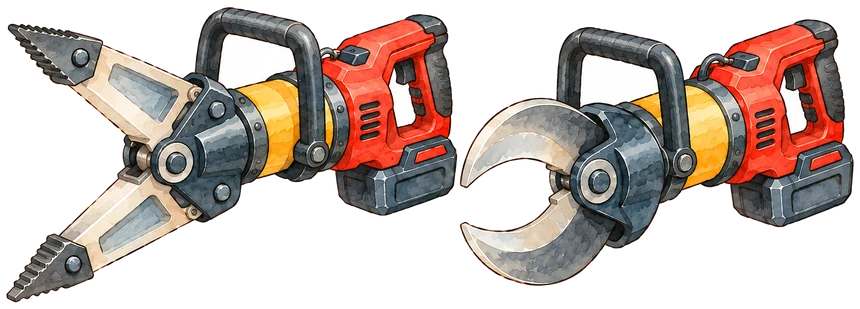
Rescue tools
These super-strong tools can cut and pull apart metal, like opening a crashed car to help the people inside.
For grown-ups
The generic name is hydraulic (or battery) extrication tools: spreaders, cutters and rams. “Jaws of Life” is one maker's trademark.
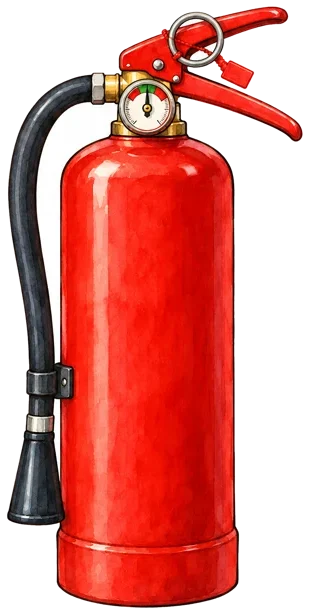
Extinguisher
A fire extinguisher sprays stuff to put out a very small fire. It's a tool for grown-ups. Your job is to get out and tell a grown-up.
For grown-ups
Adults remember P.A.S.S.: Pull the pin, Aim low at the base of the fire, Squeeze the handle, Sweep side to side. Only a grown-up who knows how should use the right extinguisher on a small, contained fire, with a clear escape route and no dangerous smoke. Everyone else must be leaving and someone calling 9-1-1 from outside. If unsure or the fire grows, get out.
People
Who works at the firehouse, and who helps when you call.
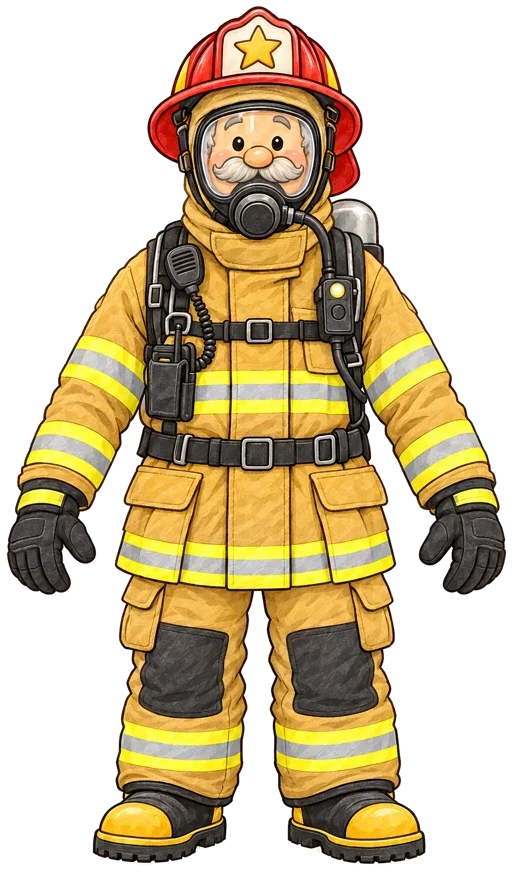
Firefighter
A firefighter is a helper who puts out fires, rescues people, and helps when someone is sick or hurt. Firefighters train hard and work as a team.
For grown-ups
About 6 in 10 US firefighters are volunteers (NFPA, 2023). Say “firefighter,” not “fireman”: women serve at every rank.
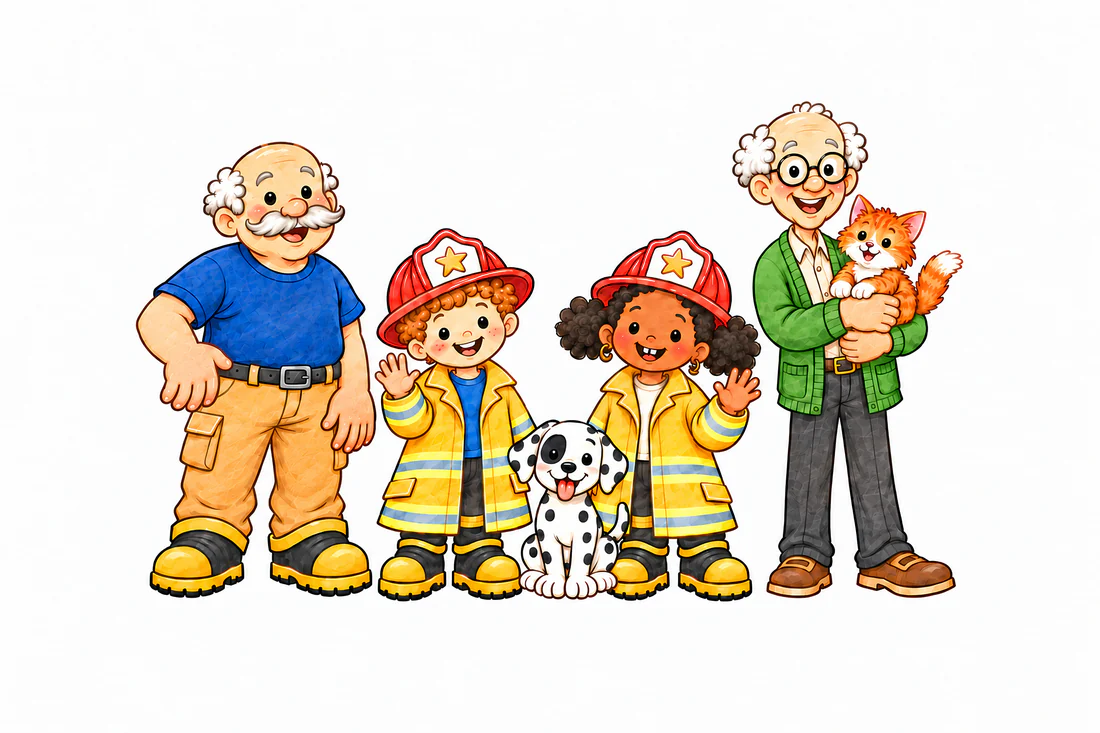
Captain
A captain is a firefighter leader who is in charge of a fire station's crew and helps keep everyone safe. Captain Gus leads our crew!
For grown-ups
A company officer, usually above lieutenant, often responsible for a station or company across all shifts. Exact duties vary by department.
Probie
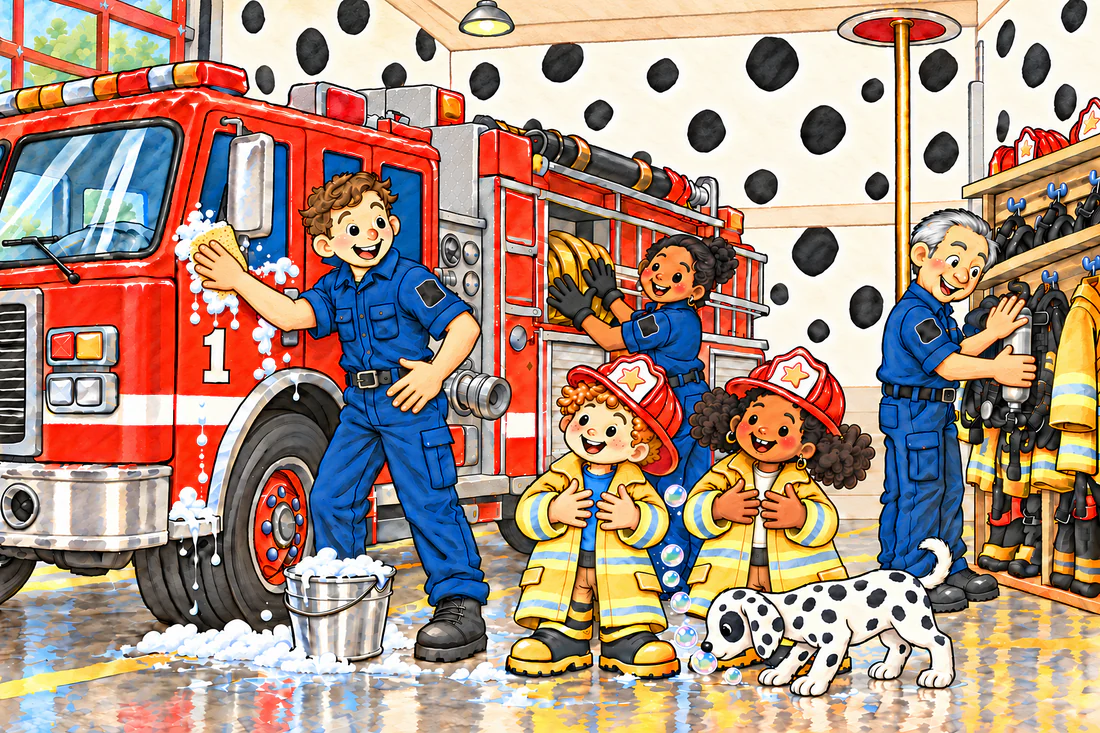
A probie is a brand-new firefighter who is still learning. Everyone helps the probie get better every day.
For grown-ups
Short for probationary firefighter. Probation commonly lasts about a year (6 to 24 months, depending on the department), and probies traditionally pitch in on chores like washing the rig.
Engineer
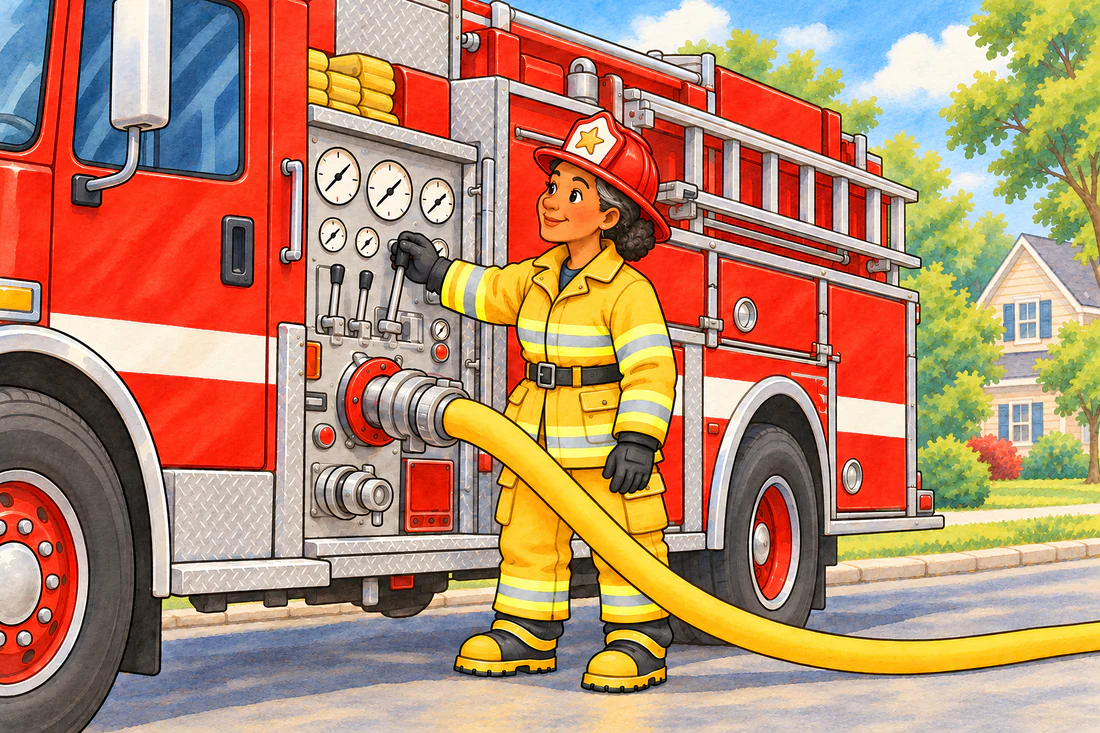
The engineer drives the fire engine and runs the pump, so the water gets to the hose with just the right push.
For grown-ups
NFPA's title is driver/operator. Departments also say engineer, chauffeur, motor pump operator or pump operator, and in some it's a rank.
EMT & paramedic
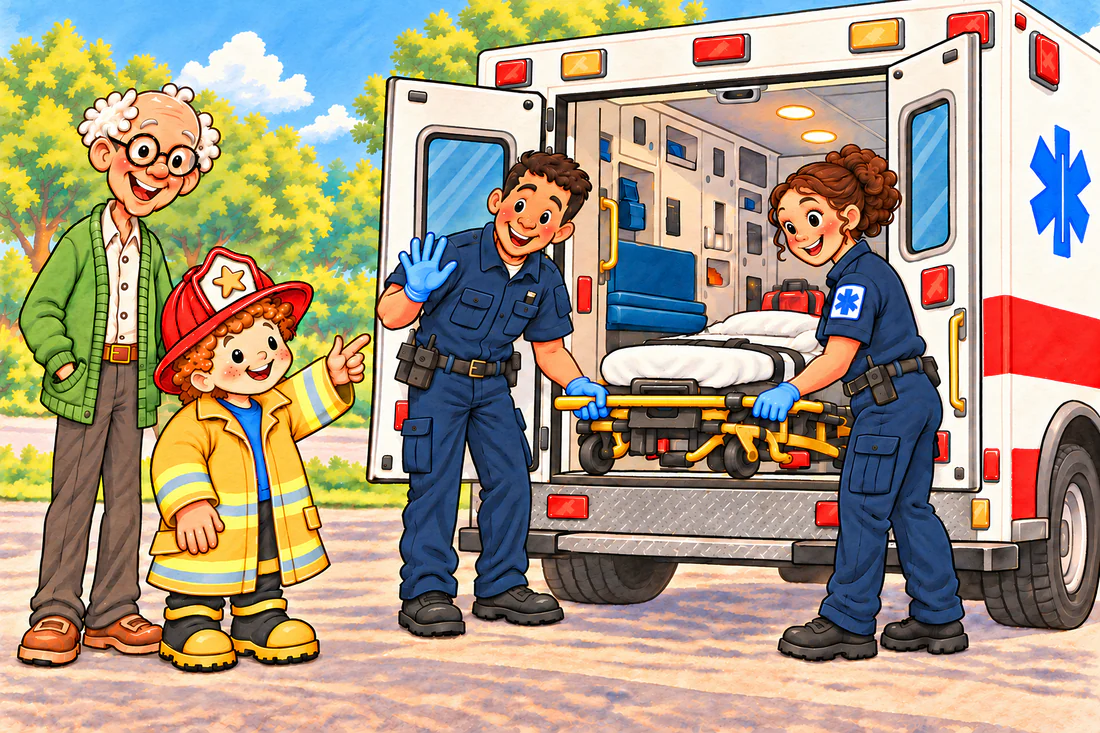
EMTs and paramedics take care of sick or hurt people. They ride in an ambulance, a little hospital on wheels. Paramedics have extra training to give advanced emergency care.
For grown-ups
Many firefighters are also EMTs or paramedics. Many fire departments run ambulances; in other places EMS is a separate agency or company.
Dispatcher
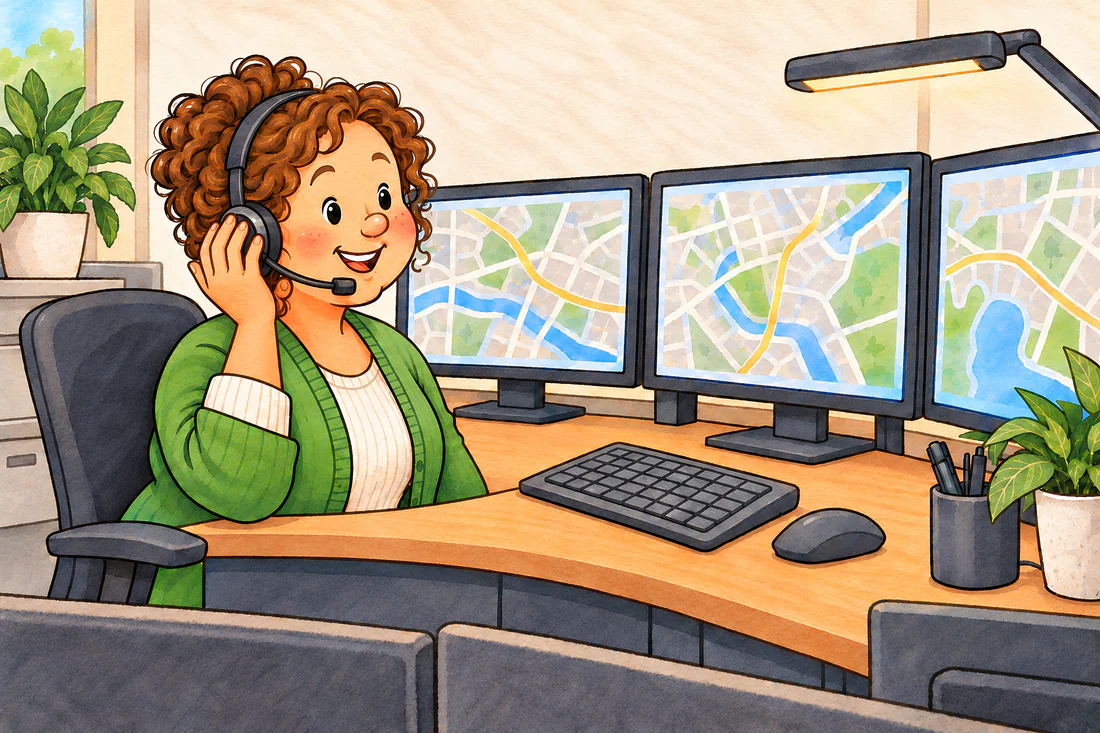
When you call 9-1-1, a calm helper answers. They ask questions, send the right helpers, and stay on the phone with you.
For grown-ups
The professional term is telecommunicator. Dispatchers can send help while they're still asking questions, so keep answering.
Firehouse things
The rooms, sounds and friends of a firehouse.
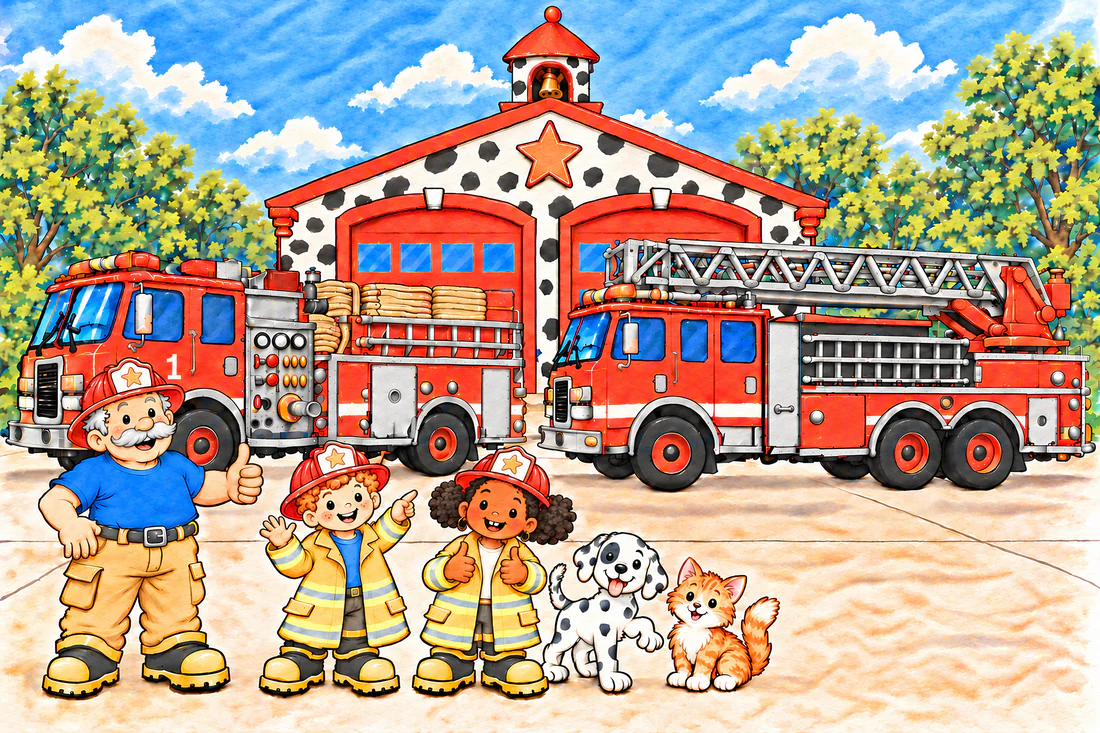
Firehouse
A fire station is where firefighters and their rigs stay, ready to go. Many firefighters live there during their shift, like a second home.
For grown-ups
“Firehouse” is common in the Northeast; “fire station” or “station” elsewhere. Many crews work 24-hour shifts and eat, sleep and train there.
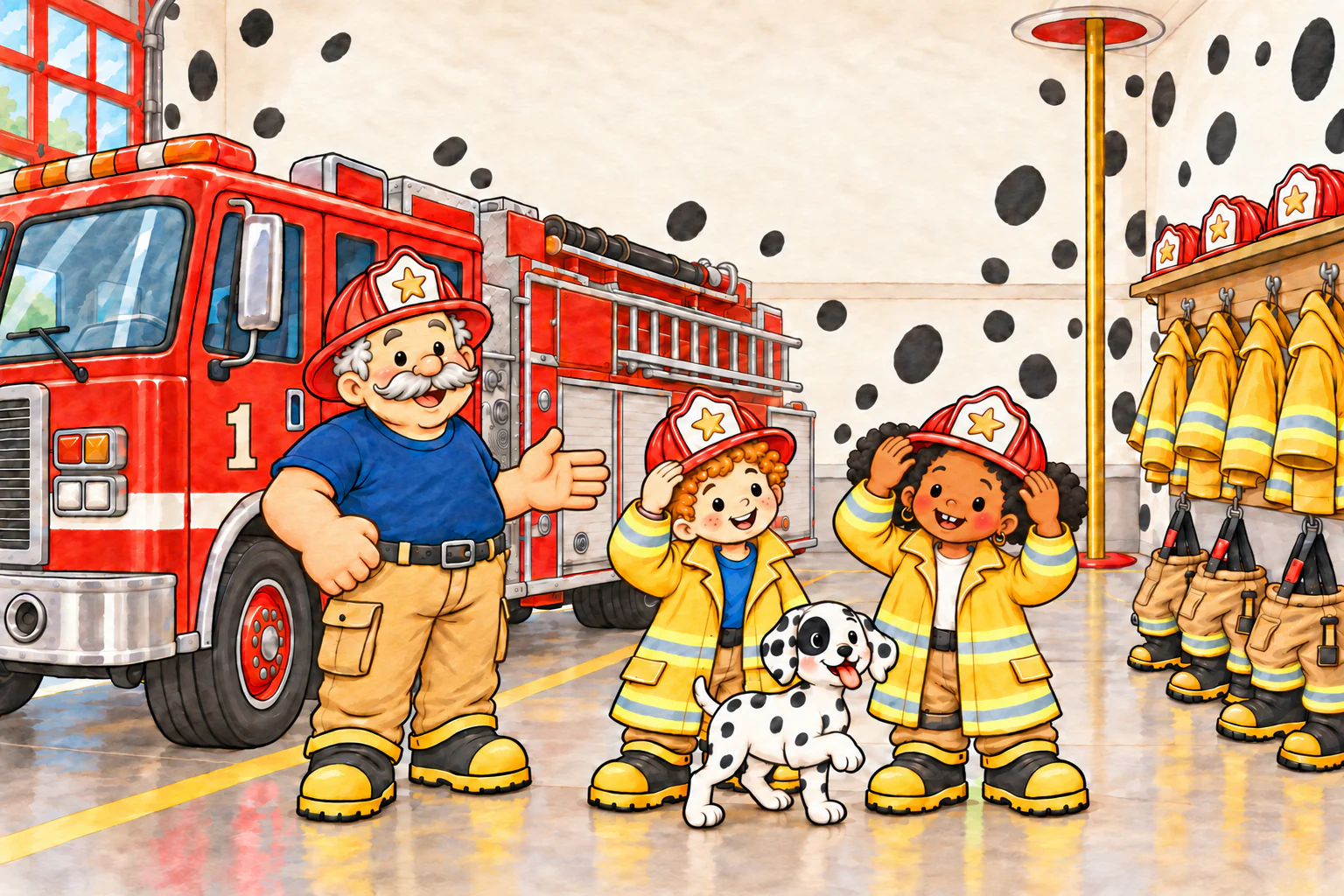
Apparatus bay
The apparatus bay is the big garage where the fire rigs park, nose pointed out, ready to roll.
For grown-ups
“Apparatus” is the fire service word for all fire vehicles. Rigs are often backed in so they can leave nose-first.
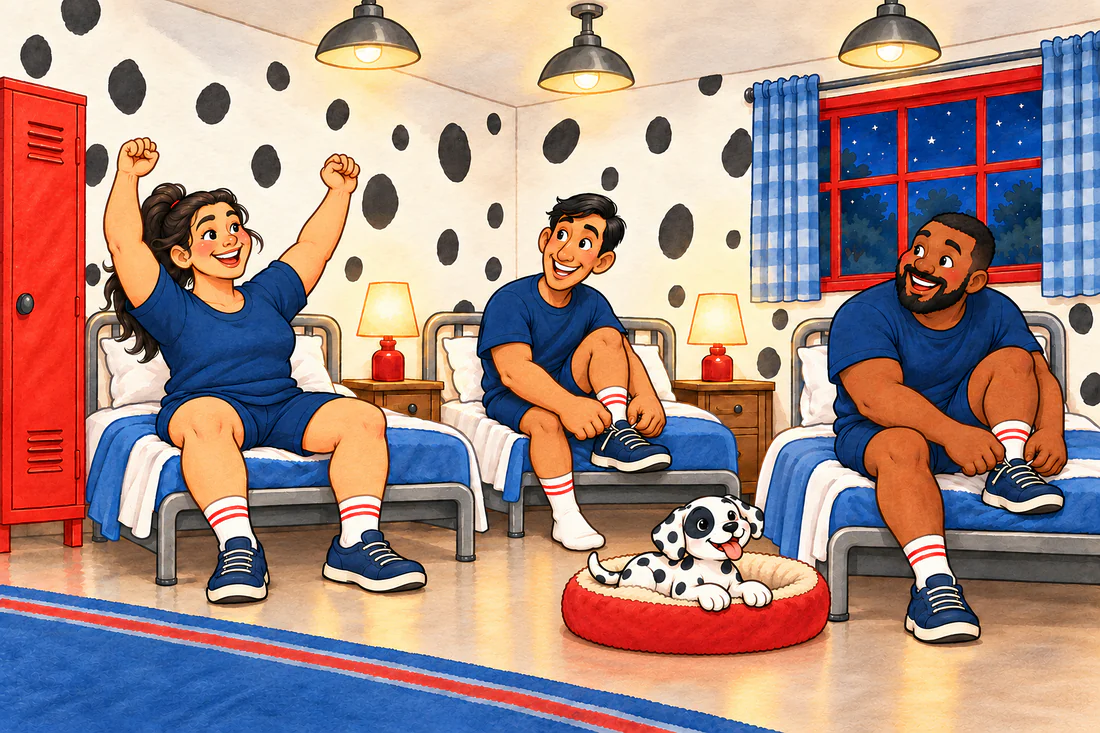
Bunk room
The bunk room is where firefighters sleep at the station. When the alarm goes off at night, they jump up and get ready fast.
For grown-ups
Many newer stations use small individual rooms instead. Turnout gear stays in the bay or gear room, not beside the bed.
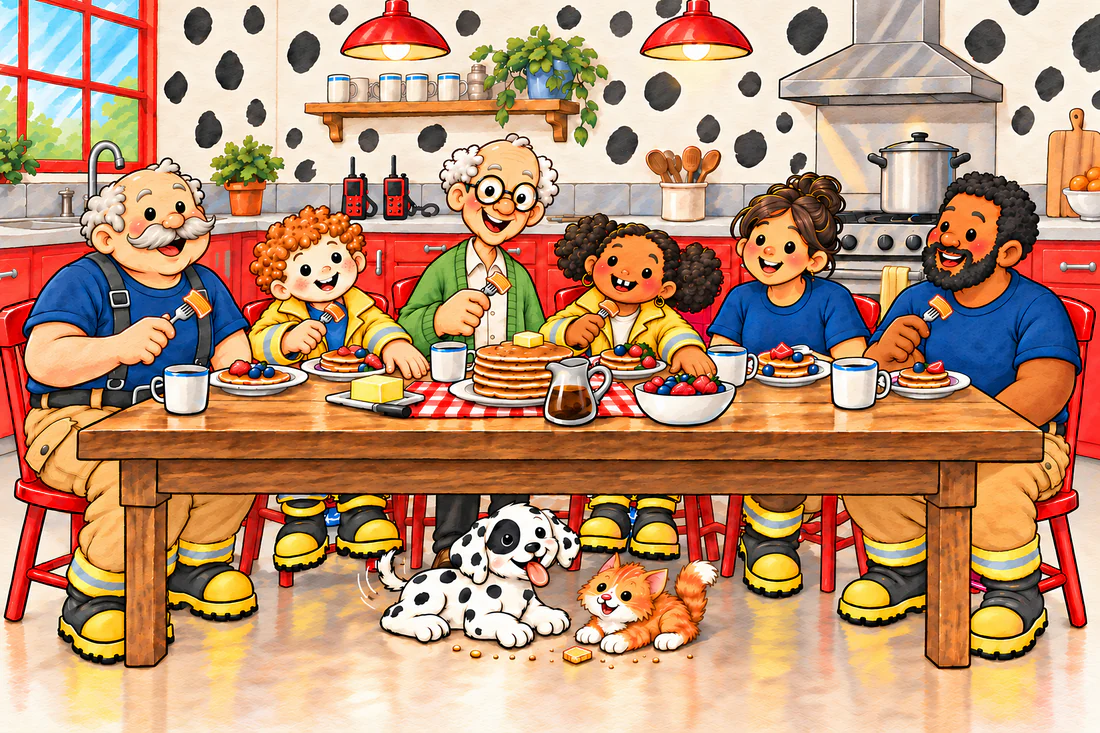
Kitchen
The firehouse kitchen is where the crew cooks and eats together, like a big family dinner.
For grown-ups
Crews commonly chip in their own money for meals and shop together in the rig, so they can leave right away if a call comes in.
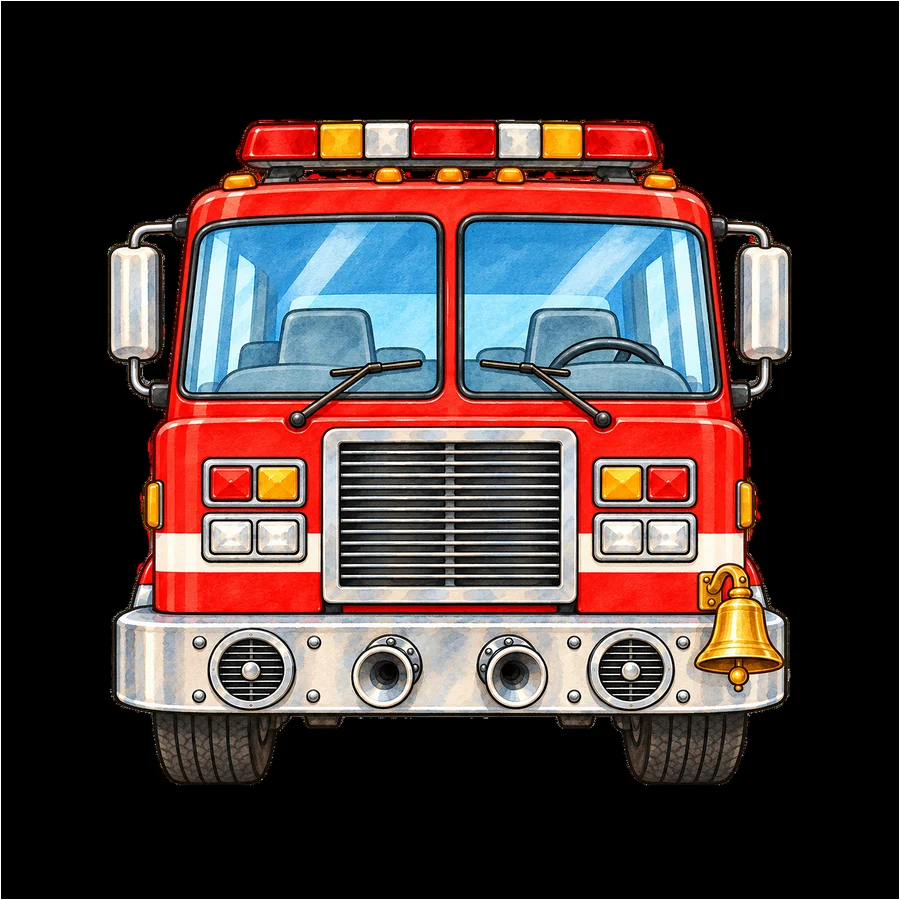
Siren & air horn
The siren goes “wee-oo, wee-oo” to tell cars to move. The air horn goes “HONK!” to say “Big rig coming through!”
For grown-ups
Modern rigs carry an electronic siren (wail, yelp and hi-lo), and many also have a mechanical siren and air horns. The shiny bell up front is mostly for tradition and parades now.
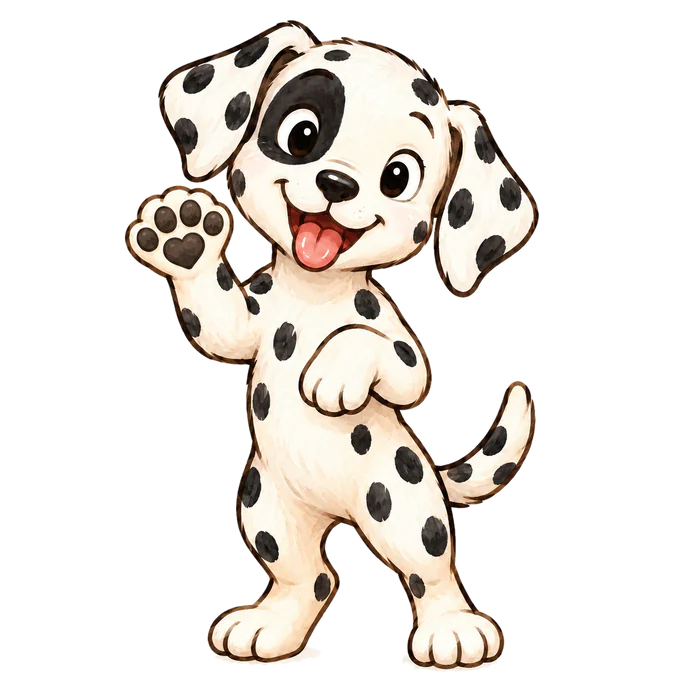
Dalmatian
Long ago, horses pulled the fire wagons. People say spotted Dalmatian dogs ran with them, clearing the way and guarding the horses. Some fire stations still keep a Dalmatian as a friend.
For grown-ups
Dalmatians were carriage dogs, bred to run alongside horses. The firehouse story rests mostly on tradition, which is why we say “people say.”
Safety words
Words every kid can use at home.
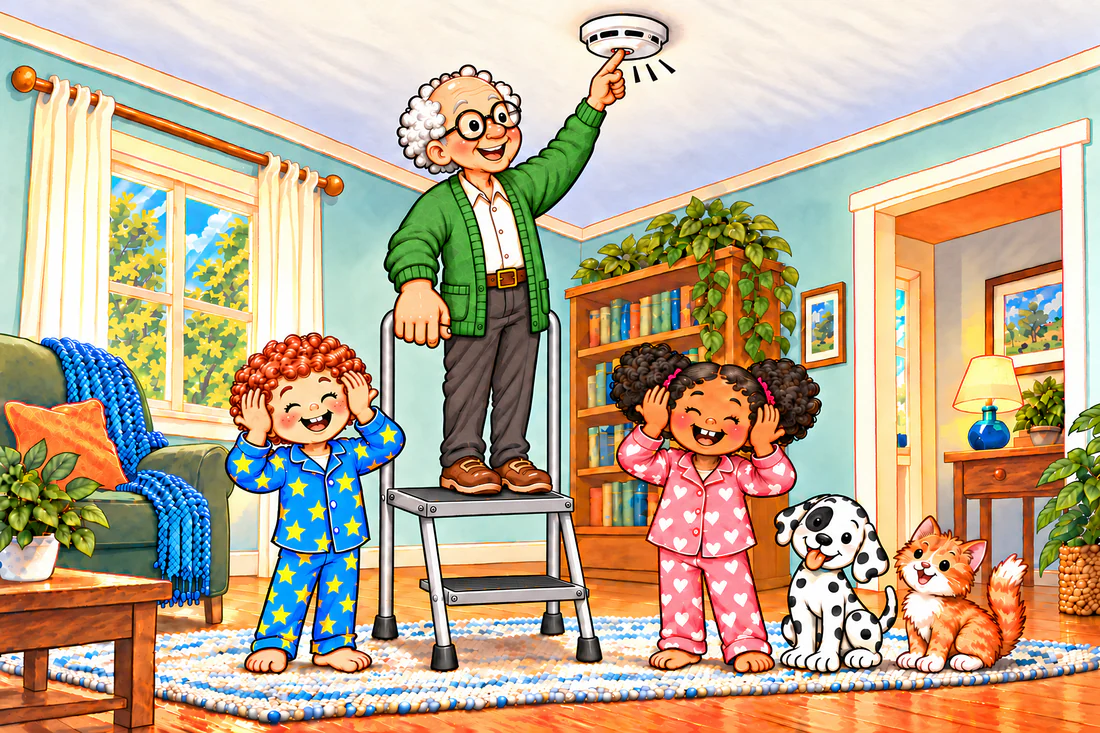
Smoke alarm
A smoke alarm is a little round helper on the ceiling. If it senses smoke, it beeps very loud so everyone knows to get out.
For grown-ups
Put alarms in every bedroom, outside each sleeping area and on every level. Test them monthly and replace them 10 years after the date they were made. Three loud beeps means fire; one chirp every 30 to 60 seconds means a low battery or a worn-out alarm. Children can sleep through a smoke alarm. Practice a drill at night and plan who will wake and help each child.
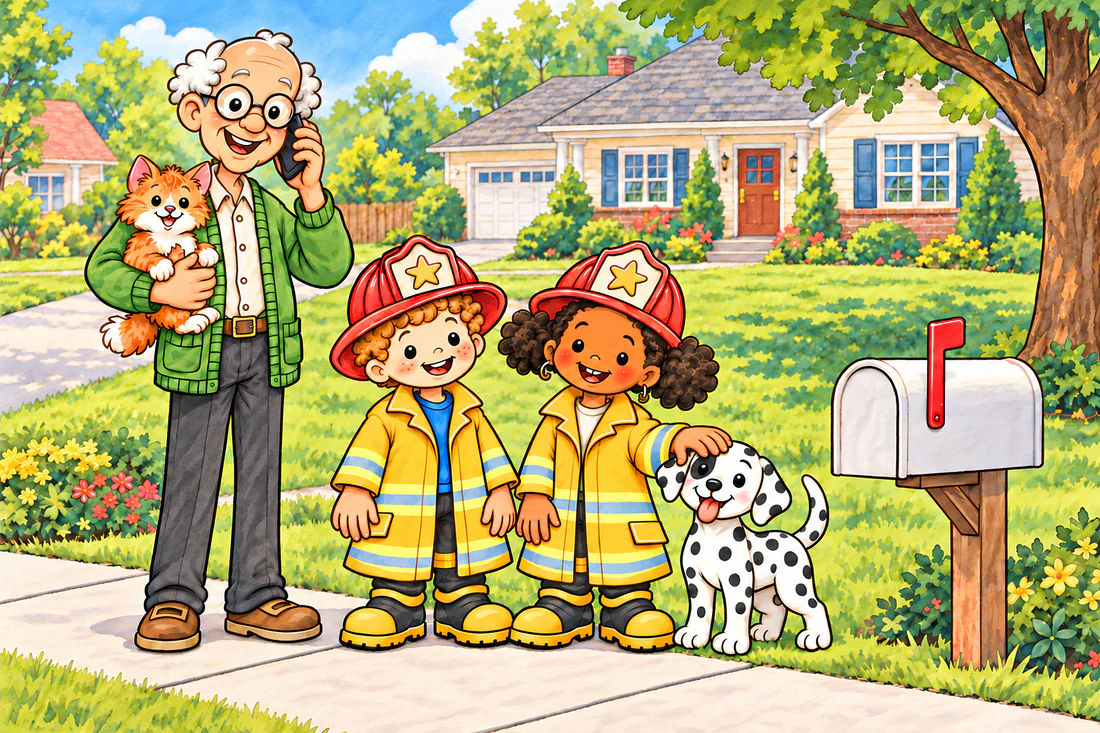
9-1-1
9-1-1 is the phone number to call in an emergency, like a fire. Say “nine-one-one.” Tell them your address, and stay on the phone.
For grown-ups
Teach “nine-one-one,” not “nine-eleven.” In a fire, get out first and call from outside.
Meeting place
A meeting place is a spot outside your home, like a tree or mailbox, where your family meets after getting out. Then everyone knows you're safe.
For grown-ups
Pick one a safe distance in front of the home, find two ways out of every room, and practice the escape plan at least twice a year, once at night.
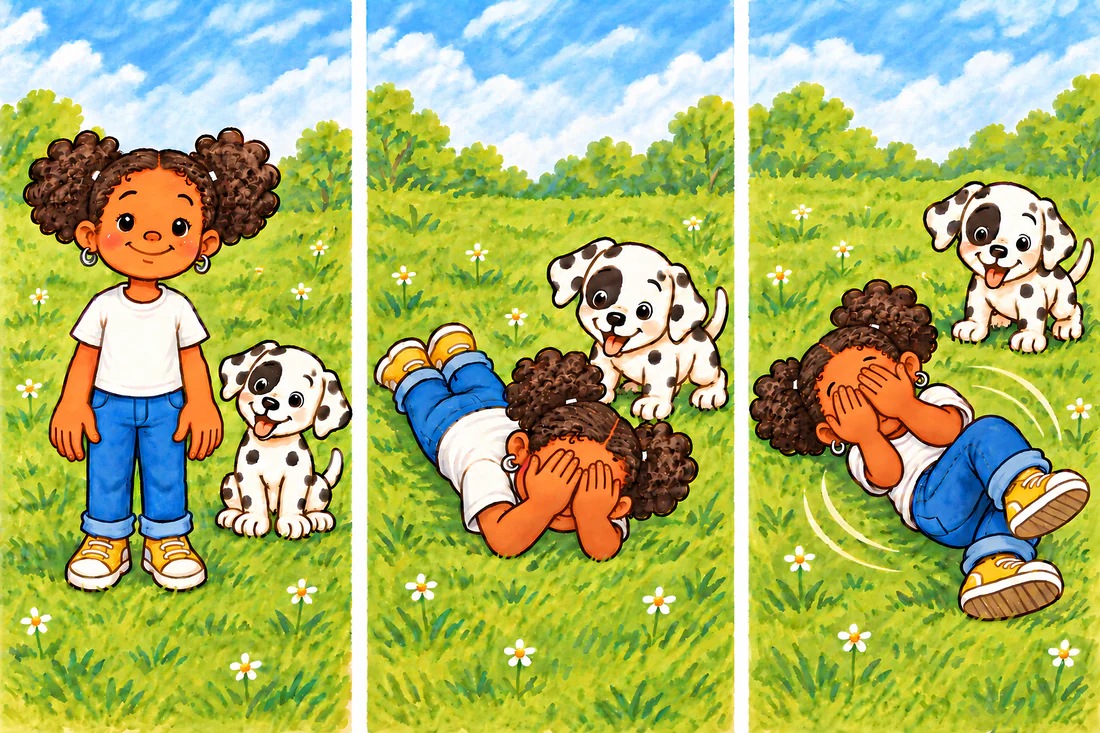
Stop, drop & roll
If your clothes catch fire: STOP, don't run. DROP to the ground and cover your face with your hands. ROLL over and over until the fire is out.
For grown-ups
It's only for clothing on fire, not for when the smoke alarm sounds. Pair it with “get out, stay out” so kids don't mix the two up.
Every word, in a picture book
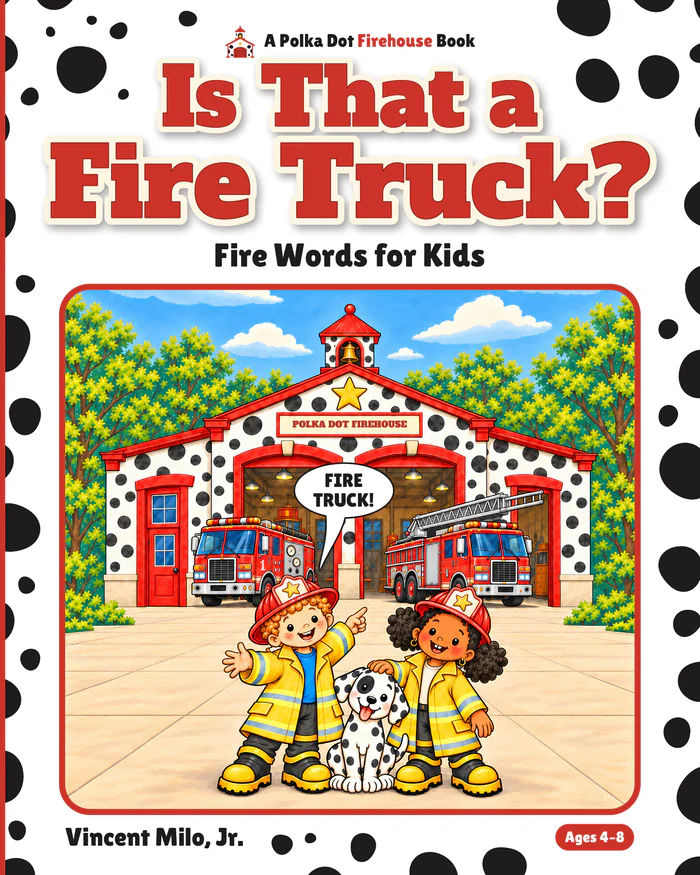
These words come from Is That a Fire Truck? Fire Words for Kids from the Polka Dot Firehouse by Vincent Milo, Jr. Pepper gives the tour, and Captain Gus helps Freddy stop calling everything a fire truck.
See the book